A living remembrance: the wildflower meadow through the year
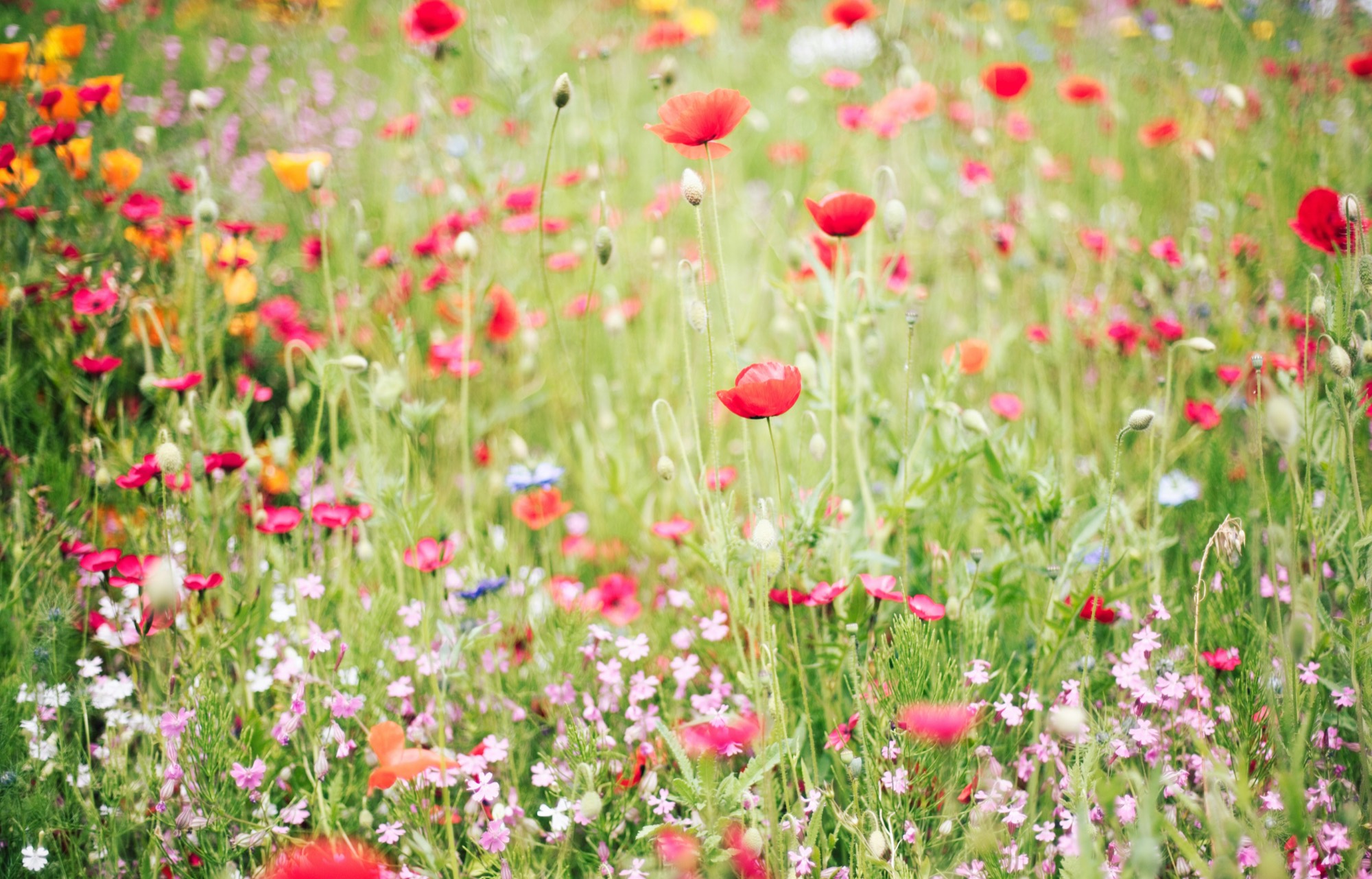
Photograph: Natalie Kinnear / Unsplash
In the Lynher Valley, just outside Saltash — where the river winds through one of Cornwall’s most peaceful Areas of Outstanding Natural Beauty — the Churchtown Natural Burial Ground is becoming something rare: a place where the act of remembrance is woven into the living fabric of the landscape itself. At its heart is a wildflower meadow, planted with more than forty species chosen not only for their beauty and their value to pollinators, but for their deep roots in Cornish soil and, in many cases, centuries of human meaning.
This is not a lawn with a scattering of daisies. It is a designed ecosystem — a tapestry of native flowers that shifts in colour, texture, and scent from the first primroses of March to the last dark-headed scabious of October. Every species earns its place. Some are here because they are the signature wildflowers of this corner of Cornwall, so familiar in the hedgerows and river valleys that they feel like they belong nowhere else. Others are here because they do practical work: suppressing grass, fixing nitrogen, feeding the bees and butterflies that are themselves part of the memorial landscape. And some are here because their names and stories carry a meaning that seems, in this setting, quietly right.
The Year Begins in Gold
The meadow’s first colours arrive in March, when primroses open along the edges and in the shelter of any boundary hedging. No flower is more associated with Cornwall. They appear in the lanes and banks of the Lynher Valley weeks before the rest of England sees them, their pale yellow faces tilted toward whatever thin spring light is on offer. In the Victorian language of flowers, primroses signified early youth and young love — but also the poignancy of something that cannot last. At a burial ground, they offer the year’s first reassurance that the cycle continues.
Hard on their heels come cowslips, deeper yellow, nodding on single stems, and — in any shaded pockets — the native English bluebells, filling the air with their faint sweetness. If the site has any damper hollows or ditch margins, marsh marigold provides bold golden punctuation, its waxy petals catching the light like polished metal. By April the meadow is already alive.
The Early Summer Surge
May and June are when the meadow truly catches fire. The annuals in the seed mix — common poppies, cornflowers, corn cockle — provide the first flush of vivid colour while the perennials are still establishing. Scarlet, blue, and pink-purple in broad, impressionistic drifts: these are the flowers of the old cornfields, largely lost to modern agriculture but given sanctuary here.
Among them, red campion begins its extraordinarily long season. If any single flower defines the Cornish hedgerow, it is this one — rose-pink, slightly untidy, thriving on the acid soils of the Lynher Valley without complaint, and flowering from May right through to November. Its old folk name, “Red Robin,” linked it to Robin Goodfellow, the guardian spirit of wild places. At Churchtown it provides a thread of soft pink that runs through almost the entire flowering year.
Ox-eye daisies open their broad white faces in May. Meadow cranesbill contributes violet-blue saucers of almost shocking intensity. Musk mallow — pale pink, finely divided, faintly scented — adds an air of cottage-garden elegance to the mix. And through it all, yellow rattle is quietly doing the most important work of any plant in the meadow: latching onto the roots of vigorous grasses and weakening them, creating the bare ground and reduced competition that the other wildflowers need to thrive. It is, aptly, known as “the meadow maker.”
High Summer: The Purple Tide
By July, the meadow’s palette deepens. The annuals begin to fade, but the perennials hit their stride, and the dominant note shifts from the reds and whites of early summer to a rich wash of purple and pink.
Common knapweed and greater knapweed are the anchors — tough, generous plants with thistle-like heads that are among the finest pollinator flowers in any British meadow. On a warm July afternoon, each flower head will be visited by dozens of bees and butterflies. Field scabious, taller and more elegant, holds its flat lilac-blue pincushion heads above the surrounding grasses. Wild marjoram, aromatic in the heat, draws in clouds of small tortoiseshells and gatekeepers.
This is the season when the meadow earns its keep as a pollinator habitat. Borage — brilliant blue, star-shaped, its flowers refilling with nectar every two minutes — is one of the most productive bee plants in the British Isles. Betony sends up neat reddish-purple spikes. Self-heal, low and persistent, carpets any bare ground with dense whorls of violet. Lady’s bedstraw adds a froth of golden yellow with a scent like warm honey.
At the margins, where the meadow meets hedgerow or boundary, hemp agrimony grows tall — its flat-topped clusters of dusty pink flowers drawing in painted ladies, red admirals, and commas. It is one of the great butterfly plants of the south-west, and its presence at Churchtown extends the meadow’s ecological reach into the surrounding landscape.
“To plant a meadow is to write a letter to the future — every seed an act of faith that the seasons will return.”
Autumn: The Long Farewell
Many wildflower meadows are spent by September. Churchtown’s is not. The deliberate inclusion of late-flowering species — particularly devil’s-bit scabious — keeps the meadow alive with colour and nectar well into October.
Devil’s-bit scabious is a plant with a story. Its name comes from the abruptly truncated rootstock, which medieval herbalists believed had been bitten off by the devil, furious that a plant with such healing power existed. Its dark violet-blue pincushion heads open from August onward, precisely when many other nectar sources are failing, making it a lifeline for late-flying butterflies and bees preparing for winter. On Cornwall’s damp acid grassland, it thrives — and at Churchtown it provides the meadow’s final act of generosity before the frosts.
Alongside it, yarrow continues to hold its flat white heads aloft — a plant once known as “soldier’s woundwort” for its supposed ability to staunch bleeding on the battlefield, and one of the toughest, most persistent wildflowers in any meadow. Herb Robert, that humble pink cranesbill of every Cornish wall and path, flowers on from April to November, quietly filling gaps and softening edges. The teasel heads, long since finished flowering, stand as architectural silhouettes through the autumn and winter, their spiny seed heads providing food for goldfinches.
The Symbolism of a Living Memorial
A wildflower meadow is, by its nature, a place of cycles — of growth and dormancy, abundance and austerity, death and return. That rhythm makes it a profoundly fitting setting for a burial ground. The flowers planted at Churchtown are not ornamental additions to a landscape of grief. They are the landscape itself, and their meanings — accumulated over centuries of folklore, herbal medicine, and poetic tradition — resonate with the purpose of the place.
Foxglove, that stately Cornish biennial, was associated with the fairy world — its old name, “folk’s glove,” referring to the “good folk” of Celtic tradition. Ragged robin, with its delicately torn petals, was linked to tears and to the ragged clothes of pilgrims. Cowslip — “Our Lady’s keys” — was said to unlock the gates of heaven. Even kidney vetch, a modest yellow legume, carries the folk name “lady’s fingers” and was used in traditional wound healing.
These are not imposed meanings. They arise from centuries of observation by people who lived close to these plants, who noticed when they flowered and what visited them, who gave them names that encoded knowledge and belief. At Churchtown, they continue that conversation — offering visitors not a static monument but a living, changing, seasonally renewed expression of continuity.
Why These Flowers, Why This Place
The species at Churchtown have been chosen with the Lynher Valley’s specific conditions in mind. Cornwall’s soils are generally acid — a characteristic that suits some wildflowers superbly and challenges others. Red campion, betony, devil’s-bit scabious, wood sage, and wild thyme all flourish on acid ground. Others in the mix, such as sainfoin and small scabious, are naturally plants of chalk downland; they have been included for their exceptional pollinator value, but may need monitoring and supplementing over time as the meadow matures.
The mix also reflects the particular character of the Lynher Valley — a landscape shaped by the river, by centuries of farming, and by its position within the Tamar Valley Area of Outstanding Natural Beauty, where sheltered slopes and Cornwall’s mild maritime climate create rich conditions for meadow wildflowers. The species that line the valley’s hedgerows — primrose, red campion, foxglove, herb Robert — are the ones that any local walker would recognise immediately. Their presence at Churchtown grounds the burial ground in its parish, making it feel not like a designed space imported from elsewhere, but like a natural extension of the landscape that has always been here.
A wildflower meadow is a patient project. The first year will be dominated by the annuals — poppies, cornflowers, corn cockle — providing immediate colour while the perennials establish their root systems below ground. By the second and third year, the balance shifts: the perennials emerge, the yellow rattle takes hold and suppresses the grasses, and the meadow begins to find its own character. Within five years, it will be a self-sustaining ecosystem — one that requires nothing more than an annual late-summer cut to maintain its diversity.
It is, in the end, a place that asks very little and gives a great deal. Colour from March to October. Nectar for bees and butterflies from the first warm days of spring to the last mild afternoons of autumn. A landscape that changes with the seasons but endures across the years. And for those who come to remember, a quiet, living reminder that the natural world — patient, cyclical, ceaselessly renewing — offers its own form of consolation.
Month-by-Month Highlights
March–April: Primrose, cowslip, marsh marigold, bluebell, herb Robert
May–June: Common poppy, cornflower, corn cockle, red campion, ox-eye daisy, meadow cranesbill, meadow buttercup, borage
July–August: Common & greater knapweed, field scabious, wild marjoram, musk mallow, betony, lady’s bedstraw, hemp agrimony, sainfoin, teasel, viper’s bugloss
September–October: Devil’s-bit scabious, self-heal, yarrow, red campion (still flowering), kidney vetch, red clover
Winter structure: Teasel seed heads, yarrow stems
The Full Species List — 42 Species
From the BSBP Bees & Butterfly Mix (26 species): Borage, corn cockle, cornflower, common poppy, yellow rattle, wild foxglove, teasel, viper’s bugloss, common agrimony, wild clary, red clover, white clover, ox-eye daisy, common knapweed, greater knapweed, purple loosestrife, wild marjoram, meadow cranesbill, musk mallow, ragged robin, sainfoin, field scabious, small scabious, bird’s-foot trefoil, kidney vetch, yarrow
Cornwall-native additions (16 species): Primrose, cowslip, bluebell, red campion, devil’s-bit scabious, betony, self-heal, meadow buttercup, lady’s bedstraw, hemp agrimony, greater bird’s-foot trefoil, meadowsweet, marsh marigold, wild thyme, wood sage, herb Robert
Churchtown Natural Burial Ground, Lynher Valley, near Saltash, Cornwall. The wildflower meadow is planted with a base of Boston Seeds BSBP 100% Bees & Butterfly mix, supplemented with Cornwall-native species selected for the Lynher Valley’s acid soils and sheltered maritime climate.
© Antony Estate