Natural burial or cremation? An honest comparison
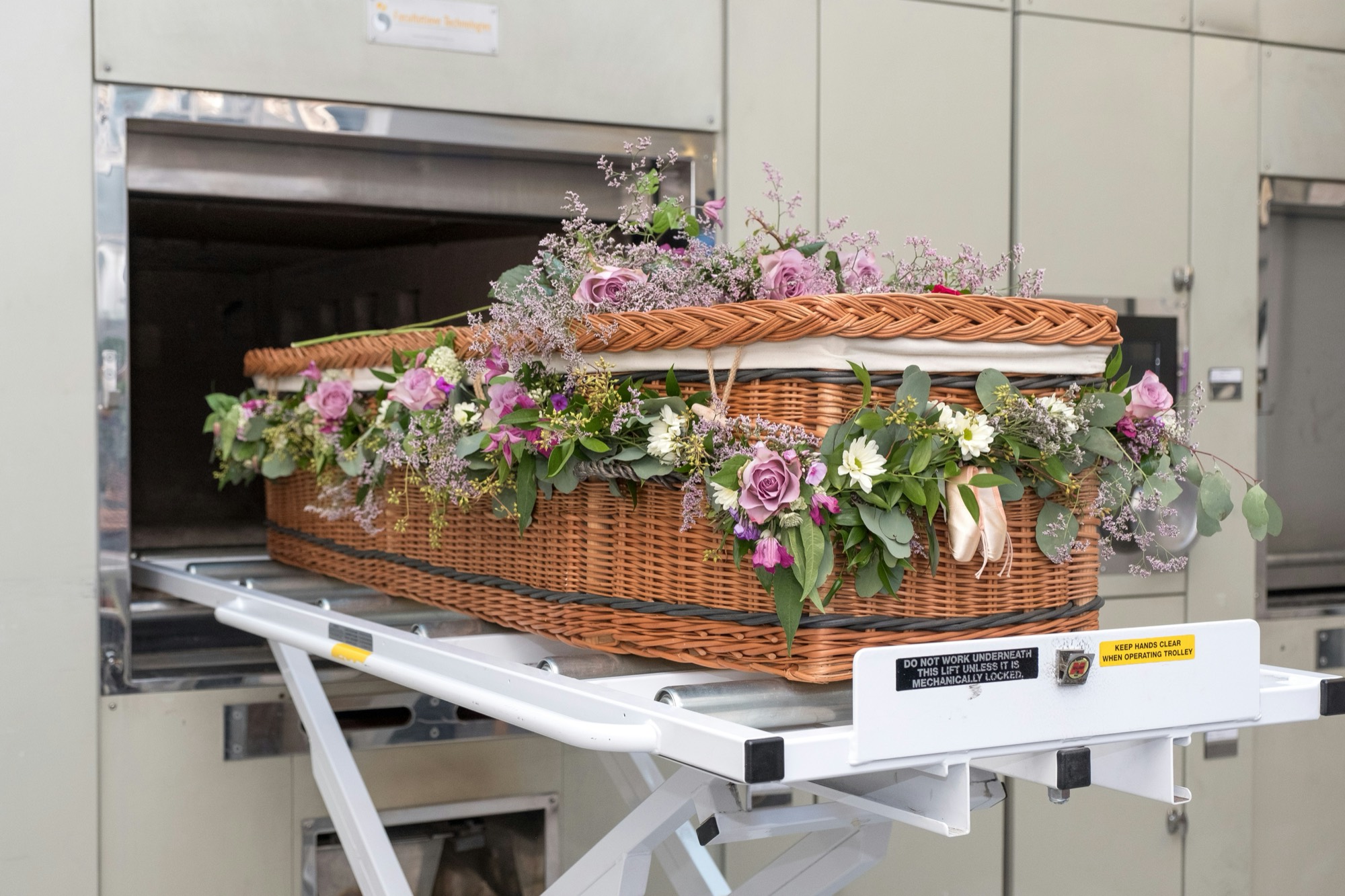
Photograph: The Good Funeral Guide / Unsplash
Before anything else: almost everyone reading this has said goodbye to someone they loved through a cremation. Around four in five funerals in the UK are cremations, and there is nothing to feel bad about in that. This page is here to inform a choice, not to sit in judgement on one already made. If you are looking honestly at the environmental side of how we say goodbye, here is the picture as fairly as we can paint it.
The footprint of cremation
Cremation is gentler on land than burial — it uses almost none — but it concentrates a good deal of energy and pollution into a single, intense event.
Estimates vary depending on what is counted, but a single gas cremation in the UK is generally put at somewhere between roughly 126 kg and 245 kg of CO₂ equivalent — broadly comparable to a long car journey of several hundred miles. Most of that comes from the natural gas used to fire the cremator, and from burning the coffin itself: around 95% of UK coffins are made of chipboard or MDF, bonded with glues that release further emissions when burned.
There are other, less visible outputs too. Cremation is a significant source of airborne mercury, released mainly from dental fillings — in 2005 it was estimated to account for around 16% of the UK’s total mercury emissions. Modern crematoria are increasingly fitted with mercury abatement to reduce this, and the picture is improving: electric cremators and, in Scotland, newly legal water cremation both promise far lower footprints. But for the great majority of cremations today, the gas-fired figures above are the reality.
The footprint of a conventional burial
A traditional burial avoids the burn, but carries its own costs. Embalming introduces formaldehyde — a chemical that can leach into soil and groundwater. The coffin is typically varnished hardwood with metal handles and fittings, resource-heavy to make. Many graves use concrete or plastic liners. And the cemetery itself is then maintained more or less indefinitely: mown, sometimes treated with weedkiller, kept formal. None of it is catastrophic, but little of it gives anything back to the living world.
What natural burial does differently
A natural burial sets out to do the opposite of “resist decay.” Everything about it is chosen to let a body return cleanly to the earth, and to leave the land richer than it found it.
- No embalming chemicals entering the soil or water.
- A biodegradable coffin or shroud — wicker, cardboard, unfinished wood, wool or linen — instead of hardwood, metal and glue.
- No concrete vault or plastic liner; the grave sits within the active, living layer of the soil.
- The land itself becomes habitat. A natural burial ground is managed as meadow or developing woodland — wildflowers, pollinators, hedgerow birds — rather than mown lawn. The graves are part of a place that supports wildlife rather than displacing it.
- The land is protected for the long term, kept as green space rather than given over to future development.
We should be honest about one thing, because honesty is the whole point of this page: no funeral has zero impact. Decomposition itself releases some greenhouse gas, and the science comparing every method in full detail is still developing. What can be said fairly is that a natural burial avoids the fuel, the chemicals and the manufactured materials that drive most of the footprint of the alternatives — and that, almost uniquely, it leaves behind a living, growing thing rather than only a smaller harm.
What about cost?
Cost varies widely by region and by choices made, so it is best to look at real figures rather than averages. Natural burial is often comparable to, and sometimes less than, a conventional burial, particularly once you set aside an expensive coffin, embalming and a stone memorial. For Churchtown’s own plot and interment fees, please see our burial options or ask us directly.
So which is “greenest”?
In purely environmental terms, a natural burial — no embalming, a biodegradable coffin, a grave that becomes meadow — is the gentlest of the widely available options in the UK today, with water cremation a low-carbon newcomer where it is available. But “greenest” is rarely the only thing that matters, and it should not be. The right choice is the one that fits the person, the family and the place — and for a great many people, the appeal of natural burial is as much about resting somewhere beautiful and alive as it is about carbon.
If a Cornish meadow above the sea feels like the right place, we would be glad to show you the ground.
Want to see it for yourself? Visit Churchtown, join an open afternoon, or get in touch with any question at all.
Sources for the figures above: Greater South East Net Zero Hub crematoria decarbonisation guidance; The CDS Group, UK cremation industry emissions; NAFD green funeral guidance (2026); peer-reviewed life-cycle research on funeral emissions. Figures are estimates and vary by method, equipment and what is included in the calculation.
More from Natural burial
same topic
What is a natural burial?
A plain, gentle guide to natural burial — what it is, what happens, how it differs from a conventional funeral, and why people choose it.