What is a natural burial?
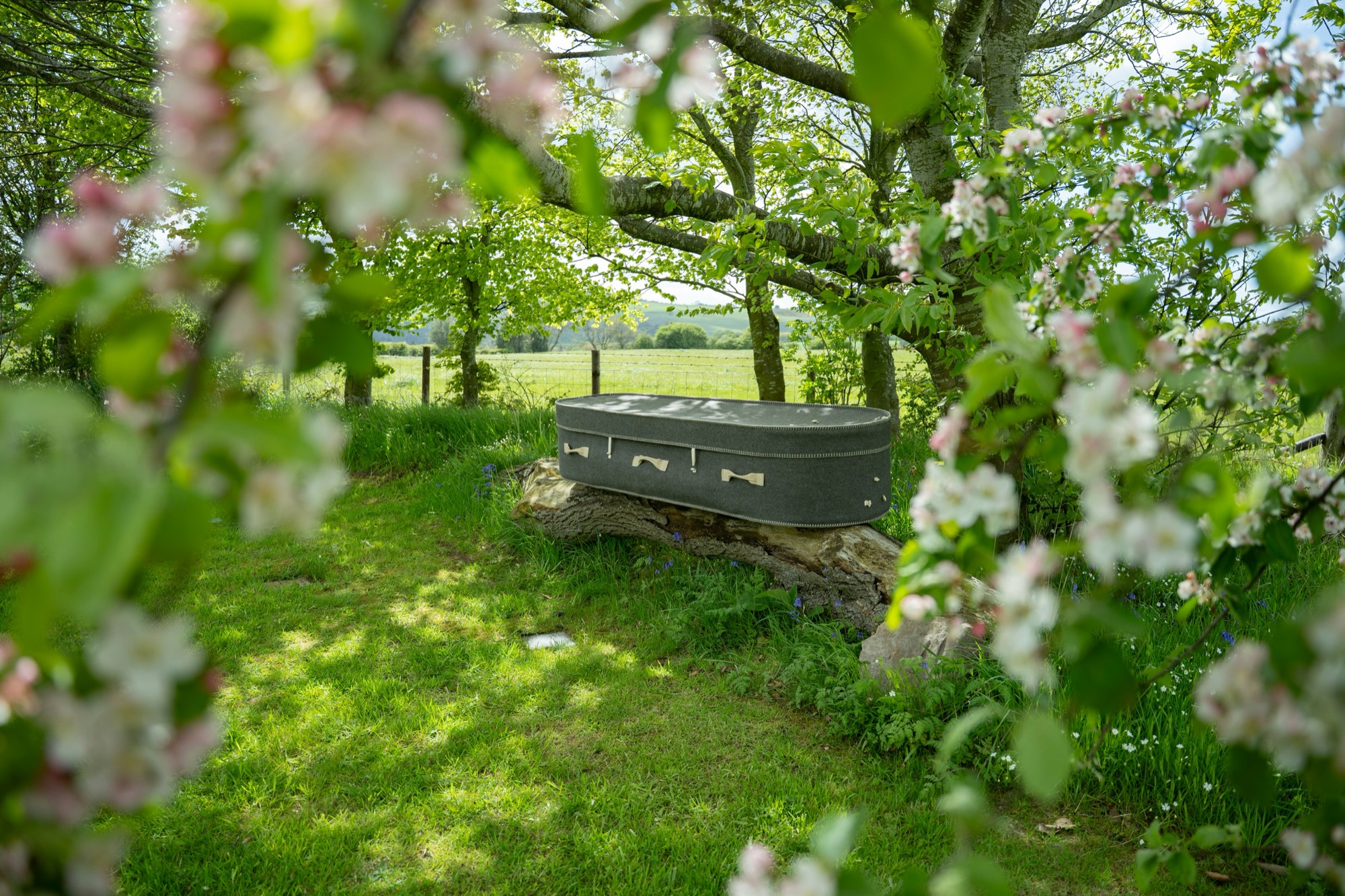
Photograph: Dead Good Legacies / Unsplash
A natural burial is, at heart, the oldest idea there is: a person returned gently to the earth, in a place that is allowed to stay wild and grow more beautiful with time. No embalming, no concrete, nothing built to last forever. Just a body laid in living soil, in a wildflower meadow that will be cared for long after any of us.
If that sounds simple, it is. Much of what we think of as a “normal” funeral — the polished hardwood coffin, the preserving chemicals, the lined and sealed grave — is little more than a century old. A natural burial sets most of it aside and asks a quieter question: what does it mean to give someone back to a landscape?
What actually happens at a natural burial
The differences from a conventional funeral are mostly about what is left out.
- No embalming. The body is not treated with formaldehyde or other preserving chemicals. It is cared for naturally and, where needed, simply kept cool beforehand.
- A biodegradable coffin or shroud. Instead of varnished hardwood with metal fittings, people choose a coffin of wicker, cardboard, bamboo or unfinished wood — or a simple shroud of wool, cotton or linen. Everything is chosen to return to the soil rather than resist it.
- A grave dug into living earth. There is no concrete vault and no plastic liner. The grave is dug at a depth that keeps it within the active, living layer of the soil, so that the natural processes of the meadow can do their work.
- A resting place that becomes part of the land. Over time the grave is not a thing apart from the meadow; it is the meadow.
A service can be whatever feels right — religious, humanist, secular, or something entirely your own. People have gathered in the open air with poems and music, walked a coffin up through the grass by hand, or simply stood together in the quiet. There is no fixed form to follow.
If you are weighing this up and have a question of your own — however small — you are always welcome to get in touch or come and walk the ground with us.
How is it different from a churchyard or cemetery burial?
A traditional burial usually means a maintained cemetery or churchyard: mown grass, a stone headstone, often an embalmed body in a sealed coffin within a lined grave. The land is kept tidy and formal, and it is held that way indefinitely.
A natural burial ground works the other way around. The land is managed for nature — as a meadow, or developing woodland — rather than for neatness. Wildflowers are left to set seed, grass is cut once a year as hay rather than mown weekly, and the whole place is allowed its seasons. The result is somewhere that feels alive rather than tended into stillness.
Will there be anything to mark the spot?
Yes — just not a traditional headstone. This is one of the questions we are asked most, and the answer reassures most people once they hear it. Markers at a natural burial ground are gentle and in keeping with the land: a native tree, a simple plaque of local slate, a discreet wooden marker, or wildflowers. And every grave is precisely recorded and mapped, so the place can always be found again, even when the meadow has grown over it. Over the years, the truest marker becomes the living landscape itself.
Is natural burial legal and properly regulated?
Yes, entirely. Natural burial is fully legal in the UK and natural burial grounds operate under the same burial law and standards as any other. Reputable sites follow the guidance of the Natural Death Centre and its Association of Natural Burial Grounds, keep formal records of every interment, and handle all the necessary paperwork on a family’s behalf. Choosing a natural burial changes the spirit of a funeral, not its lawfulness.
Who chooses a natural burial?
All sorts of people, for all sorts of reasons. Some are drawn by the environmental gentleness of it. Some simply love the idea of resting in a Cornish meadow above the sea rather than under a slab of polished granite. Many find that, faced with the strangeness of arranging a funeral, the natural choice is the one that feels most honest and least manufactured. And a growing number plan it for themselves, long in advance, as a quiet act of care for the people they will leave behind.
There is no right answer here, and no judgement in any direction. A natural burial is one way of saying goodbye — open, unhurried, and rooted in a particular place.
Thinking about a natural burial, now or for the future? You are welcome to visit Churchtown, come to an open afternoon, or simply ask us anything. There is never any pressure, and no question is too small.
More from Natural burial
same topic
Natural burial or cremation? An honest comparison
A fair, jargon-free look at the environmental difference between cremation, conventional burial and natural burial in the UK — without guilt or sales pressure.